
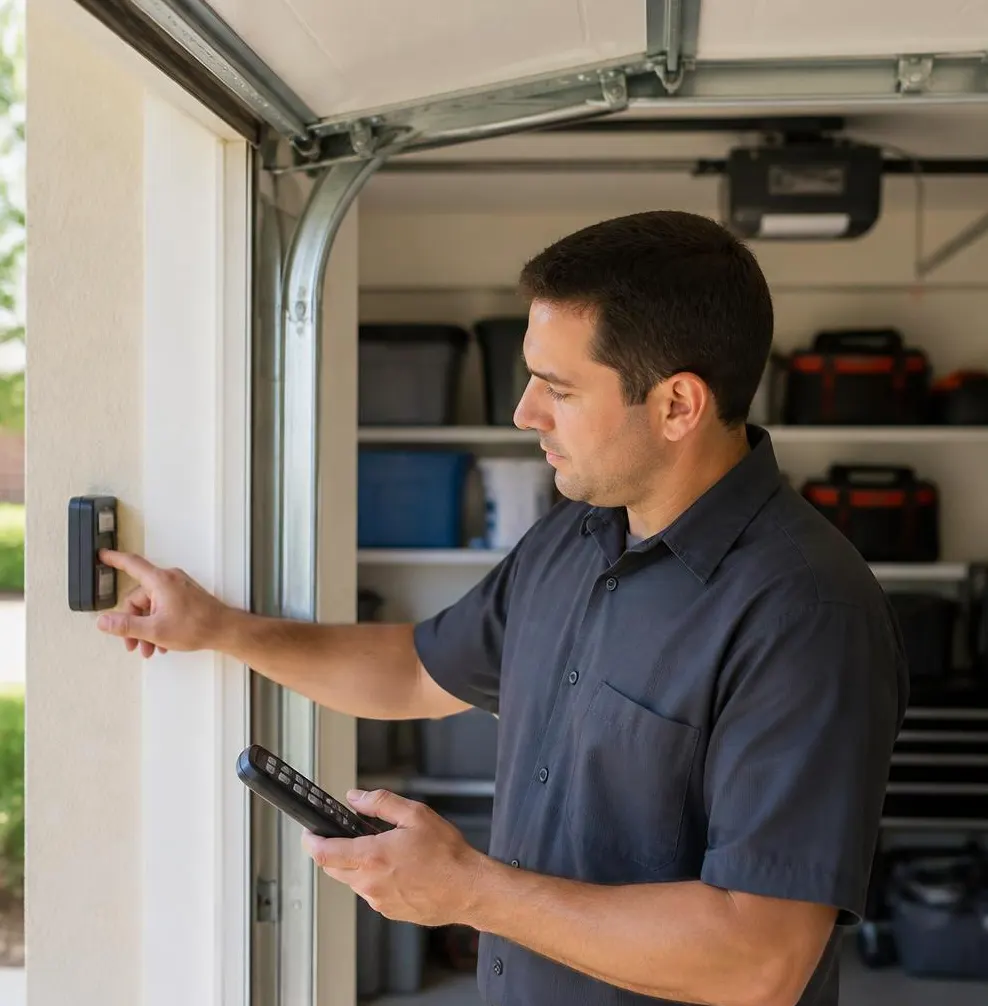
It's usually one of you backing out too fast, or the other one swinging a bike handlebar the wrong way. Now there's a dent in the garage door, one of you says it's nothing, the other wants it fixed before the neighbors notice. Here's how to actually settle it.
Not All Dents Are the Same Problem
The material of your door changes everything. A lot of homes in this area have steel doors, especially newer builds, while some of the older houses still have wood doors or early-generation aluminum. Each one dents differently.
- Steel panels: Usually dent in a shallow, rounded shape without cracking. Most of the time this is cosmetic.
- Aluminum panels: Lighter and more prone to sharp, creased dents that can actually weaken the panel at the crease line.
- Wood doors: Dent less often but can splinter or compress the grain, which matters more in humid summers when wood already swells and contracts.
- Fiberglass or composite: Can crack instead of dent, which looks worse but is sometimes easier to patch.
The Quick Test: Cosmetic Dent
If the dent is in the flat field of a panel, away from the edges, seams, and hardware, and the door still opens and closes smoothly without scraping or catching, you're almost always looking at a cosmetic issue. It bothers the eye more than it bothers the door.
Signs it's purely cosmetic:
- The door opens and closes at normal speed with no hesitation
- No grinding, popping, or new noise during the cycle
- The dent doesn't line up with a hinge, roller bracket, or panel seam
- You can't see daylight or a gap around the dented area when the door is closed
Minor dents in steel can sometimes be pulled out with a plunger and some patience, or gently warmed with a hair dryer and pushed out from behind if you can access the panel from inside. These are reasonable weekend fixes, not emergencies.
When a Dent Is Actually Structural
A dent becomes a real problem when it affects how the door moves or how the panel holds its shape under stress. This is the version that should end the argument in favor of calling someone.
- Dents near hinges or roller brackets: These areas carry the weight and tension of the door. A dent here can throw off alignment and accelerate wear on rollers, hinges, or even the opener.
- Dents on a seam between panels: This can create a gap that lets in wind-driven rain, which is a real issue here given how often storms roll through with heavy rain and occasional coastal weather in fall and winter.
- Dents that changed the door's sound or speed: If the door suddenly grinds, hesitates, or reverses unexpectedly after the impact, the track or opener may be compensating for a bent panel.
- Creased or buckled dents: Unlike a smooth dent, a crease means the metal has actually folded, which weakens that section permanently. These don't pop back out and tend to get worse with repeated opening and closing.
There's also a seasonal angle worth knowing. Metal contracts in cold weather, and a dent that seemed harmless in October can tighten up and bind against the track once temperatures drop and the door sees daily freeze-thaw cycles through winter. A dent that traps water is also a rust risk once ice and road salt get involved, especially on older steel doors that have already seen a few winters.
A Simple Way to Decide
Stand at the side of the door while it closes, not in front of it. Watch the path of the roller in the track near the dent. If it tracks straight and smooth, the dent is cosmetic. If you see the roller wobble, hear a new squeak, or notice the door tilt slightly as it passes that section, treat it as structural and stop opening and closing it until it's checked.
When to Call Potomac Garage Door
If the dent is near hardware, on a seam, or has changed how the door sounds or moves, that's the point to stop guessing. Our technicians can tell within a few minutes whether a panel needs to be straightened, replaced, or left alone, and whether the impact knocked anything else out of alignment, like the track or the opener's travel settings. We handle garage door repair for exactly this kind of situation, and if the damage is isolated to one panel, we can often replace just that section through our garage door installation service rather than the whole door. Given the humidity and winter freeze-thaw cycles typical here, it's worth having a damaged panel looked at before the cold really sets in.
If you're in Potomac, Bethesda, Rockville, North Bethesda, Gaithersburg, Germantown, Chevy Chase, or Silver Spring and want a second opinion on that dent, give Potomac Garage Door a call. We'll tell you straight whether it's a quick fix or something more, and get it handled before winter weather makes the decision for you.