
The One Rule Worth Remembering
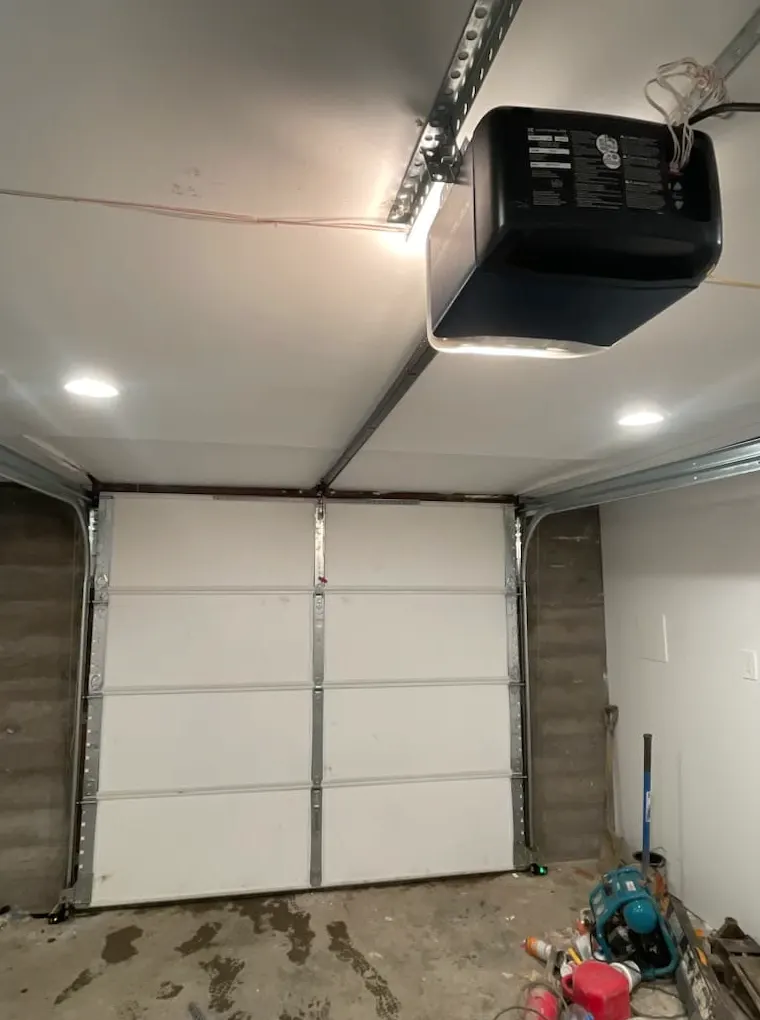
If you wouldn't let a toddler play near a moving car, don't let them play near a moving garage door. The exceptions are worth knowing, though: a garage door can injure someone even when it's not moving, and a door that passes a casual glance test can still have a failed safety feature underneath.
Garage doors are the largest moving object in most homes, and the opener that drives them has enough force to lift a few hundred pounds of wood, steel, or insulated panel. That same force, misapplied, is what causes the injuries worth preventing.
What Actually Goes Wrong
Pinch Points Between Panels
Every sectional garage door has horizontal seams where panels fold against each other as the door moves. Small fingers fit into these gaps easily, and the pinch happens fast enough that a parent standing a few feet away can't react in time. This is one of the most common garage-related injuries in households with young children, and it happens on both old wood doors and newer steel ones — older doors often lack pinch-resistant panel design altogether.
Auto-Reverse Sensors That Don't Work
Modern openers are required to have two safety features: photo-eye sensors near the floor that detect an obstruction, and a mechanical auto-reverse that stops the door if it meets resistance. Both can fail quietly. Sensors get knocked out of alignment by a bike, a broom, or a stray basketball. Humidity and condensation — common in the area's humid summers — can fog or corrode sensor lenses over time. A door with misaligned or dirty sensors may still close every single day without a problem, right up until the day a pet or child is in the path.
Homes With Older Openers
Potomac's mix of older and newer housing means some garage openers in the area predate the photo-eye requirement altogether. If you live in an older home and have never replaced the opener, it's worth checking whether it has floor-level sensors at all. If it doesn't, that's not a maintenance issue — it's a missing safety feature.
Remote Controls and Keypads
A garage door remote left in a cupholder, a diaper bag, or a kitchen drawer at toddler height is effectively a toy that can start a few hundred pounds of door moving. Wall-mounted push buttons inside the garage are just as risky if they're within reach of a curious three-year-old.
Springs and Cables Under Tension
Torsion springs store enormous tension to counterbalance the door's weight. They're mounted above the door, usually out of reach, but a broken or failing spring can snap with force enough to dent nearby surfaces or send a cable flying. Pets investigating a garage corner, or kids using the garage as play space, should never be near a door when a spring looks stretched, rusted, or visibly uneven on one side.
How Badly This Can Go Wrong
The range runs from minor to serious: a pinched finger that needs an ice pack and a bandage; a crushed hand from a door that didn't reverse; a pet trapped under a door that closed on it before the sensor caught it; or a spring failure that injures whoever happens to be standing nearby when it lets go. None of these require a freak accident — they require one overlooked sensor, one remote within reach, or one spring nobody noticed was wearing out.
The Specific Actions That Prevent It
- Test the auto-reverse monthly. Place a roll of paper towels or a 2x4 flat on the ground where the door closes. The door should touch it and immediately reverse. If it doesn't, stop using the opener until it's repaired.
- Check the photo-eye sensors. They sit a few inches off the floor on either side of the track. Wipe the lenses clean, make sure both lights are solid (not blinking), and confirm nothing — a bike, a box, a hose — is blocking the beam.
- Keep remotes and keypads out of reach. Store handheld remotes above toddler height, and set a keypad code that isn't painfully obvious. Many newer openers let you disable the wall button temporarily when kids are playing nearby.
- Never let anyone stand under a moving door. This includes pets. A door in motion should have a clear path, full stop.
- Inspect springs visually, don't touch them. Look for rust, gaps between coils, or one spring that looks stretched compared to the other. If something looks off, treat it as a repair call, not a DIY project — spring tension is genuinely dangerous to release without the right tools.
- Teach kids the garage door is not a toy, even when it's open. Climbing on a stationary door, hanging on tracks, or playing near cables should be off-limits the same way a driveway is.
- Watch for winter-specific risks. Icy tracks or a door that's sticking in cold weather can behave unpredictably — jerking, stopping partway, or reversing without warning. If a door isn't moving smoothly, don't let kids or pets near it until it's been looked at.
When to Call Potomac Garage Door
If your auto-reverse test fails, if the photo-eye lights won't stay solid, or if a spring looks uneven or worn, those are signs to call rather than troubleshoot further. Potomac Garage Door handles Garage Door Opener Repair & Installation for households that need working safety sensors restored or an outdated opener replaced with one that meets current safety standards. For springs, cables, or anything under tension, their Spring Replacement service handles it safely with the right tools, so no one in the house needs to go near a door that isn't behaving normally.
If you're in Potomac, Bethesda, Rockville, or anywhere nearby and want a safety check before winter settles in, call Potomac Garage Door for a straightforward inspection and the repairs to go with it.